
This case study is based on a real instruction. Names, addresses and identifying details have been changed, and figures rounded, to protect client confidentiality.
The situation
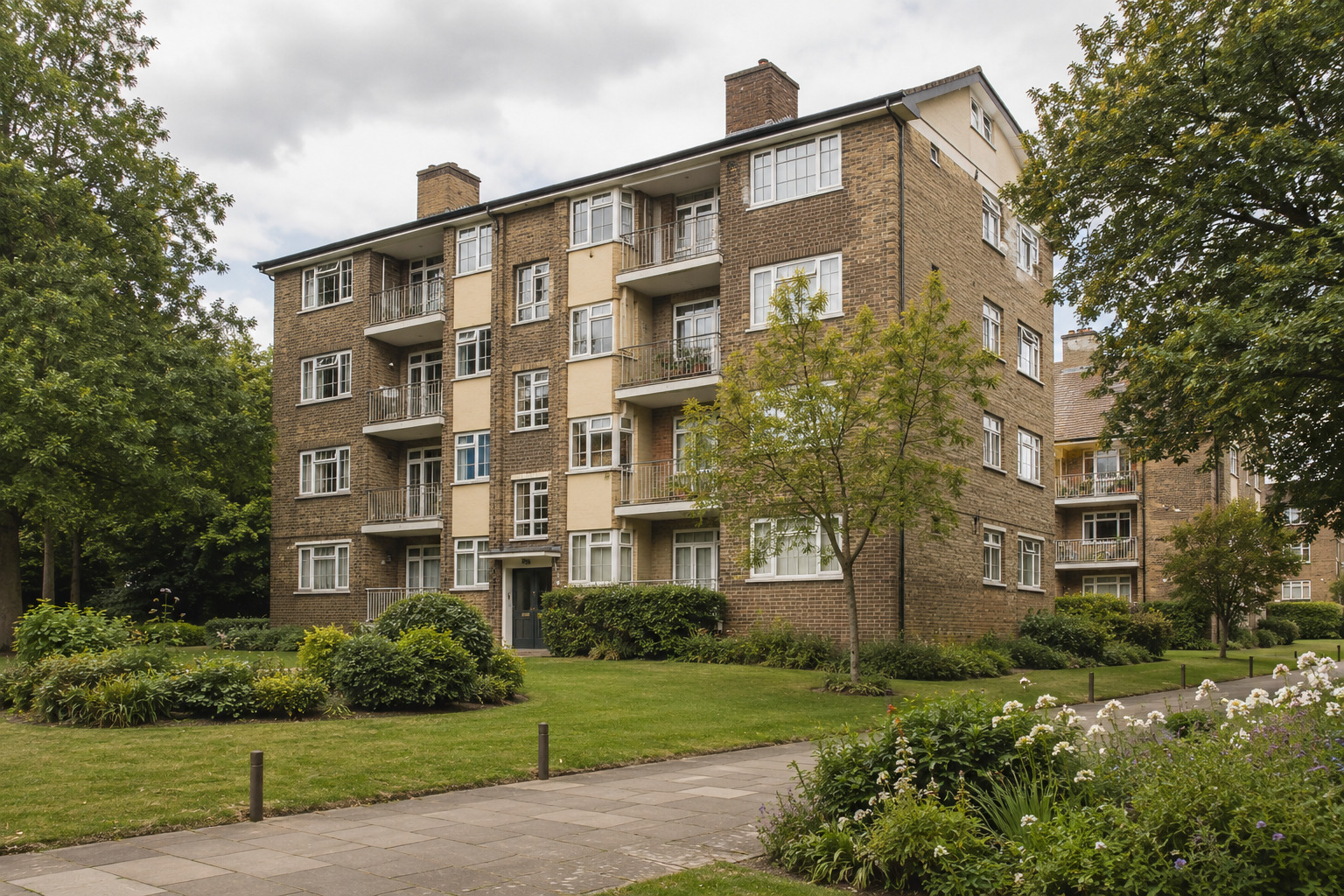
Our client owned and lived in a one-bedroom flat on a post-war estate in Kingston upon Thames. The Council had promoted a regeneration scheme for the estate and was acquiring interests, initially by agreement and with compulsory purchase powers behind it.
He received a written offer of £248,000 from the acquiring authority’s valuers, together with a letter explaining that a home loss payment would follow. He had lived there for nineteen years. He came to us because the offer would not buy anything comparable in the area and he did not know whether that was his problem or theirs.
It was theirs.
What compulsory purchase compensation actually covers
The governing principle is equivalence: a claimant should be left, so far as money can do it, no better and no worse off than before. That is delivered through several distinct heads of claim, and one of the most common mistakes owners make is treating the authority’s offer for the land as if it were the whole entitlement.
- Market value of the interest — Rule 2, section 5 of the Land Compensation Act 1961. The open market value, disregarding the effect of the scheme itself.
- Home loss payment — sections 29–30 of the Land Compensation Act 1973. Payable to owner-occupiers of at least one year’s standing, at 10% of market value, subject to statutory minimum and maximum figures which are uprated periodically.
- Disturbance — Rule 6. The reasonable costs and losses that flow naturally from being displaced.
- Professional fees — the reasonable surveying and legal costs of pursuing the claim, ordinarily borne by the acquiring authority.
Where the market value offer failed
We inspected, measured and researched the local market properly. Three problems with the authority’s figure emerged:
- Scheme-affected comparables. Several of the transactions relied upon were sales within the estate itself, at prices already depressed by the regeneration scheme’s blight. Under the no-scheme world principle, those values must be disregarded.
- Condition and improvements. The flat had been comprehensively refitted at the owner’s expense — new kitchen, bathroom, full rewire and replacement glazing. The authority’s inspection had been cursory and its figure reflected a standard-specification unit.
- The wrong catchment. The comparable set was drawn too tightly around the estate rather than the wider market a purchaser of this flat would actually be competing in.
We produced a full Red Book valuation report with evidenced comparables from outside the scheme’s influence, supported by measured floor areas and a photographic schedule of the improvements.
The settlement
| Head of claim | Basis | Settled |
|---|---|---|
| Market value | Rule 2, s.5 Land Compensation Act 1961 | £270,000 |
| Additional compensation | Negotiated, reflecting specific circumstances of the acquisition | £10,000 |
| Home loss payment | 10% of market value, s.30 LCA 1973 | £27,000 |
| Disturbance — removals, disconnection and reconnection of services, redirection of post | Rule 6 | £4,200 |
| Disturbance — SDLT and acquisition costs on the replacement property | Rule 6 | £8,400 |
| Disturbance — legal and agency costs on the replacement purchase | Rule 6 | £3,900 |
| Total compensation | £323,500 |
Our fees for the negotiation were charged at an hourly rate and recovered from the acquiring authority, not from the client.
The point about stamp duty
The SDLT line is worth drawing out, because it is the element most frequently overlooked. If a claimant is displaced from a home they owned and must buy a replacement, the stamp duty on that replacement purchase is a loss caused by the acquisition. It is recoverable as disturbance, provided the replacement is reasonable and broadly equivalent. On a £323,500 package it accounted for over £8,000 — money that would simply have been forfeited had nobody claimed it.
What to do if you receive a CPO offer
- Do not accept anything in the first letter. An opening offer is a starting position, not an assessment of your entitlement.
- Get your own valuation. In most cases the acquiring authority pays for it.
- Start a costs file immediately. Removals quotes, storage, redirection, mortgage redemption penalties, agents’ and solicitors’ invoices — every receipt is a potential head of claim.
- Take advice before you buy a replacement. The reasonableness of the replacement property affects what is recoverable.
Frequently asked questions
How much compensation do you get for a compulsory purchase?
Compensation comprises the open market value of your interest, a home loss payment of 10% of that value for qualifying owner-occupiers (subject to statutory minimum and maximum limits), and disturbance covering the reasonable costs and losses caused by being displaced — including removals, professional fees and the stamp duty on a replacement home. Opening offers from acquiring authorities routinely cover only the first of these.
Who pays for my surveyor in a CPO claim?
In the ordinary course, the acquiring authority pays the claimant’s reasonable surveying and legal fees as part of the compensation. That is a deliberate feature of the compensation code, designed so that claimants are not deterred from taking proper advice.
Can I refuse to sell under a compulsory purchase order?
Once a CPO is confirmed, you cannot ultimately prevent the acquisition, but you retain a full right to be properly compensated, and any dispute over the amount can be referred to the Upper Tribunal (Lands Chamber). The negotiation is about the sum, not the sale.
Facing a compulsory purchase?
Blakes Chartered Surveyors act for claimants in compulsory purchase across London and the South East, with a growing caseload in Kingston, Lambeth and Merton. We inspect and prepare a Red Book valuation report — usually at the acquiring authority’s cost — and then represent you in negotiations to secure the full compensation package to which you are entitled.
Call 020 7373 7373 or email info@blakessurveyors.com.


